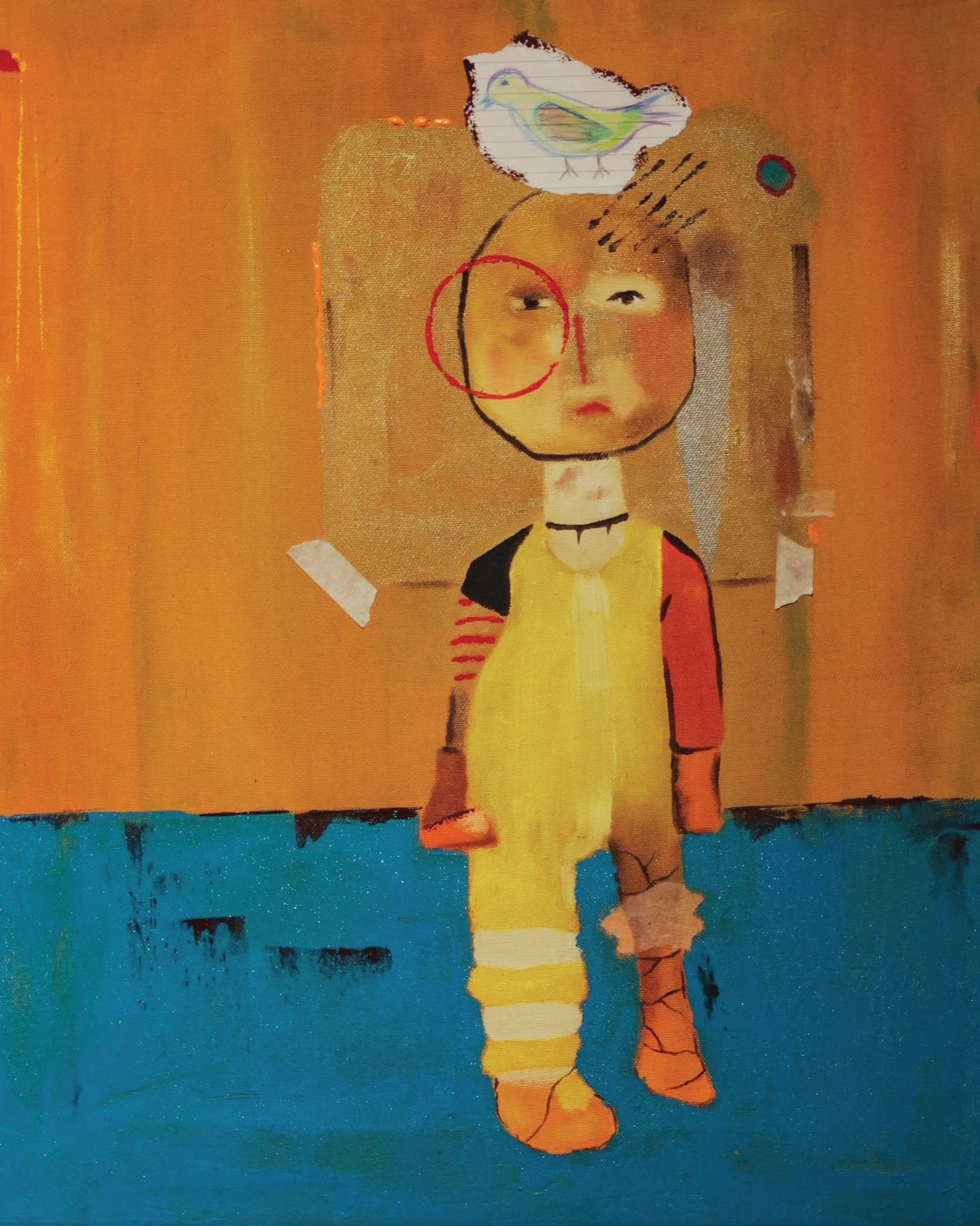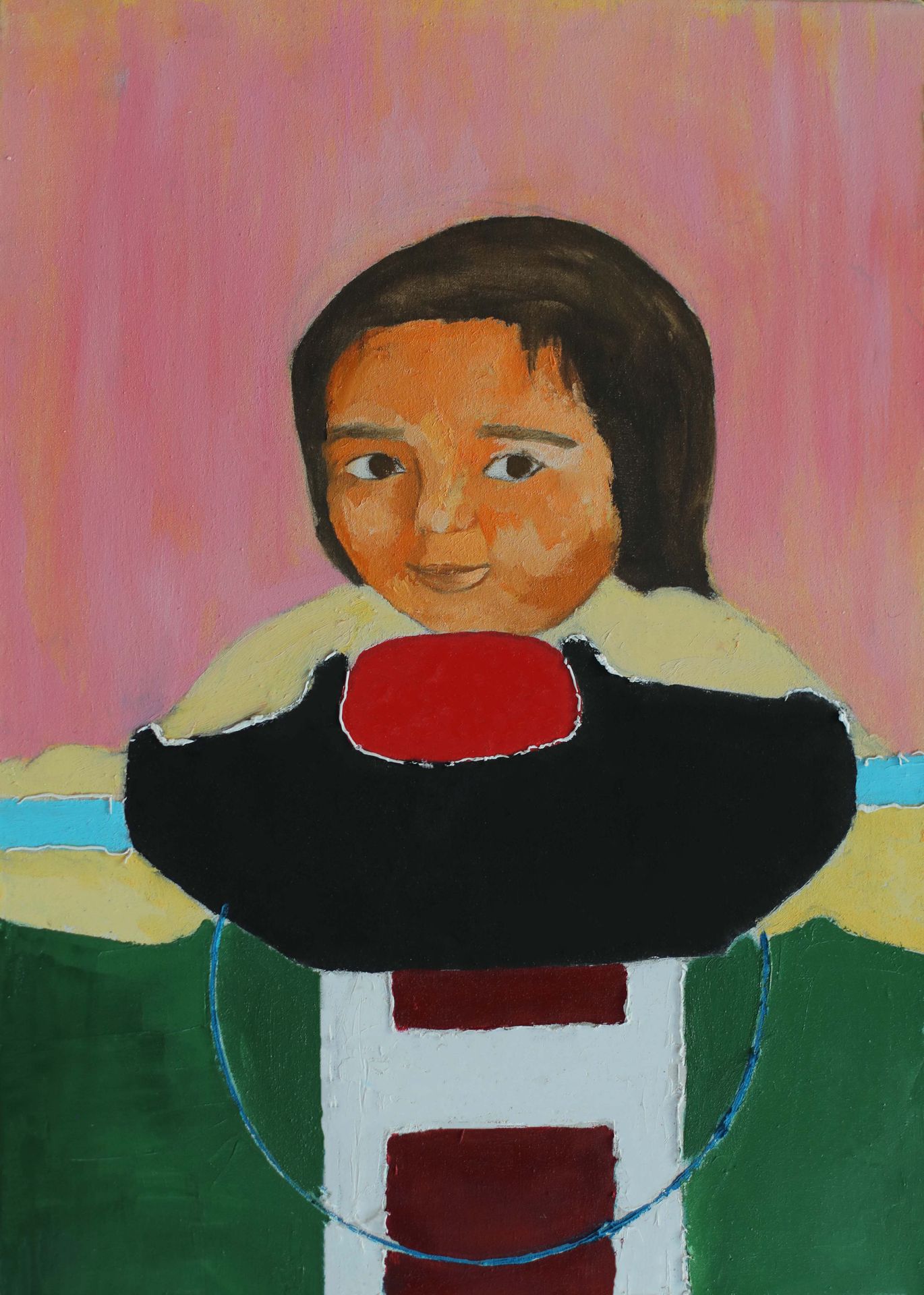
Rana Abou Saada's work resists first impressions.
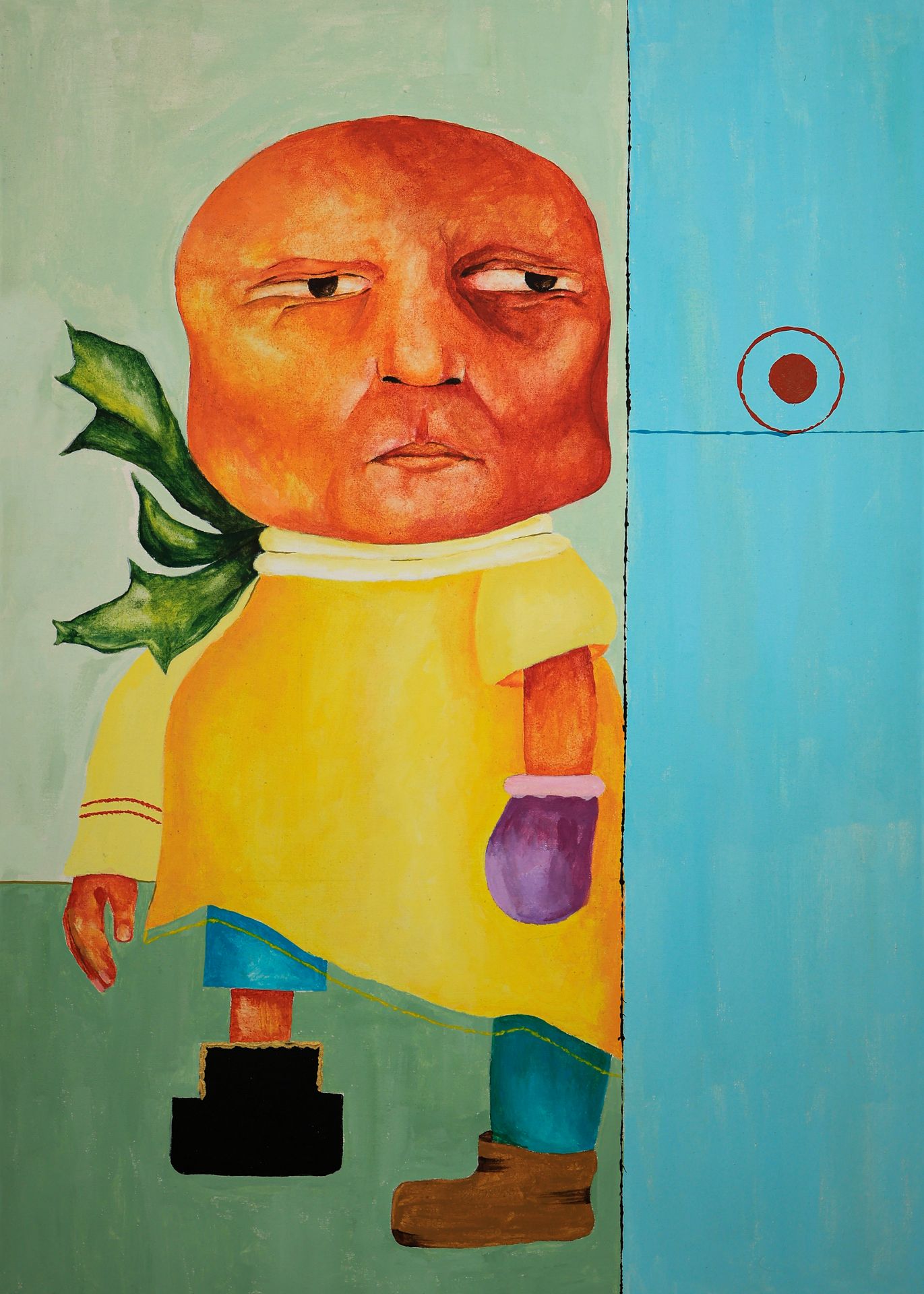
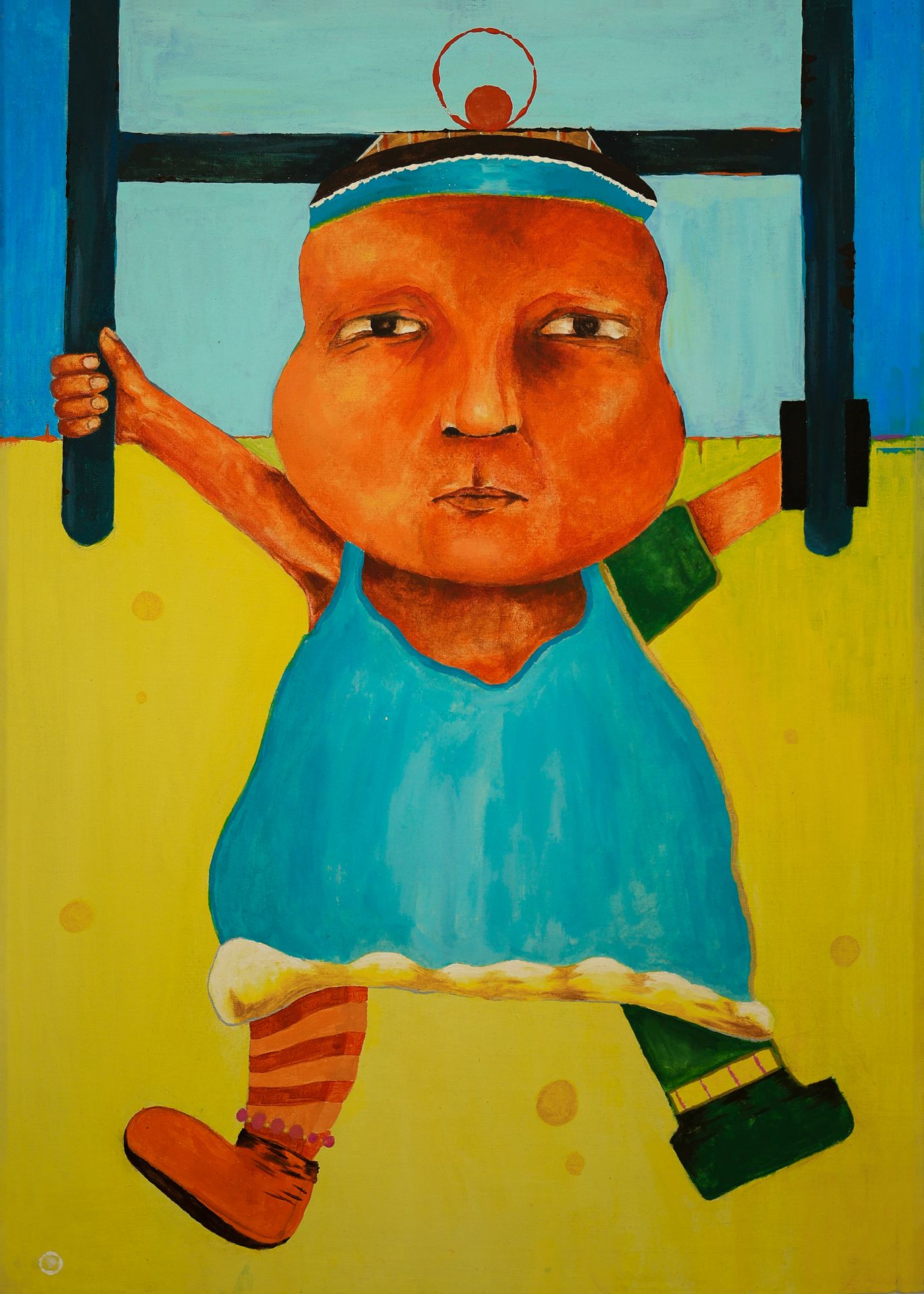
At first glance, you notice the colors. Bright, vibrant palettes. Recurring figures with distinctive features. Compositions that feel playful, familiar, and immediately inviting. It would be easy to read the work as lighthearted, even childlike.
Rana herself is often confronted with this assumption.
Yet spend time with the paintings, and another layer begins to emerge. The colors carry tension as much as joy. The figures move through moments of hesitation, pressure, adaptation, and transformation. What initially appears straightforward becomes far more complex.
At 26, Rana is already thinking about her work in terms of practice rather than production. She speaks often about building a visual language, protecting space for experimentation, and allowing the work to evolve without rushing toward conclusions. For her, painting is not a vehicle for fixed messages or singular interpretations. It is a way of exploring experiences that resist easy explanation.
For Rana, it's:
"This is me; this is my work." When asked what’s occupying her mind most these days, she said: “It's trying to balance daily life, long working hours, and maintaining a consistent space for artistic practice," she says. "I make use of whatever time I can find to be alone with my tools and ideas, building a visual language that genuinely feels close to me."
Drawing has been part of Rana's life since childhood, but it wasn't until her studies at the Faculty of Fine Arts in Damascus that she began to understand painting differently. What started as a personal form of expression gradually became a way for her to understand herself and the world around her.
There was a particular moment during her studies that shifted something. While working on a traditional painting, she found herself introducing something deeply personal into the work. What began as an academic exercise became something else entirely—a glimpse of the artistic language she would continue to develop in the years that followed.
"The work sometimes knew me better than I knew myself."
It is a striking statement, and one that perhaps explains the openness that runs throughout her work. Rana is not interested in fixed interpretations or singular meanings. She speaks about paintings as spaces people enter rather than messages they decode.
"A painting is not an explanation of an idea," she says. "It's an attempt to hold on to a feeling that is difficult to express in words."
""The work sometimes knew me better than I knew myself."
That philosophy can be felt throughout her practice. A recurring figure appears across paintings and projects, changing from one work to the next, carrying traces of different experiences, emotions, and transformations. Rather than representing a specific individual, the character becomes a vessel through which Rana explores states of being that are often difficult to articulate directly.
One of the most common
misconceptions about her work stems from its use of color. Bright palettes often lead viewers to assume the paintings are cheerful, playful, or nostalgic. Rana doesn't necessarily reject those readings. What interests her is what exists underneath them.
For her, color is not decorative. It is emotional.
A vibrant palette can carry tension just as easily as joy. Joy itself can be overwhelming. Color can hold contradiction, uncertainty, adaptation, resilience, or discomfort. The figures that inhabit her paintings move through emotional landscapes that are rarely one-dimensional, and the colors move alongside them.
"Sometimes people assume that bright colors make the work cheerful or childlike," she says. "For me, color can be part of the tension itself."
The longer you spend with the work, the more apparent this becomes. What initially appears playful gradually reveals itself as something more layered. The paintings are not asking to be solved. They are asking to be experienced.
"I hope people see the works as emotional states and open-ended experiences," she says. "What matters to me is the feeling that remains after viewing the work, not arriving at a single fixed meaning."
Rana speaks about her process with the same openness. She rarely begins with a fixed outcome in mind. More often than not, the work starts with an image, a feeling, or a question. From there, she follows it wherever it leads.
She compares the process to finding the end of a thread and following its path.
"The real part of the work begins when things move slightly beyond my control."
That willingness to embrace uncertainty extends beyond painting itself.
Today, Rana is increasingly experimenting with sculpture, wire, thread, paper clay, and installation-based work, expanding the visual world she has been building over the past several years.
Her current project, Emergency, reflects this evolution. She describes it as an open and experimental space rather than a finished series.
"I feel this project is leading me toward a freer space," she says. "It centers on a transforming character that moves through different states of pressure, adaptation, and survival, while searching for something that resembles freedom or meaning."
What emerges most clearly from speaking with Rana is not simply a painter, but an artist committed to growth. She speaks candidly about the realities of building a practice—the exhaustion, the doubt, the challenge of finding time, and the patience required to keep going.
"I was surprised by the fact that artistic work does not end with skill or ideas," she says. "Building a practice requires the ability to continue despite exhaustion, limited time, doubt, and constant change."
Perhaps this is why she speaks so thoughtfully about the contemporary art scene. While she acknowledges the opportunities created by new platforms and communities, she also believes that artists today face a different challenge.
"The real challenge today is maintaining authenticity amid the speed at which everything is moving."
That belief also shaped her decision to join SUR.
"What attracted me to SUR was the feeling that there was a genuine investment in artists and in building long-term relationships with their work, rather than simply exhibiting work quickly."
When asked what kind of response means the most to her, she answers simply.
"When someone pauses in front of the work and feels that something within the image belongs to them—even if they can't fully explain why."
And when asked what progress means, she doesn't talk about recognition, visibility, or success.
"Progress is feeling that the work is still evolving, honestly."
It is perhaps the answer that best captures Rana's perspective as an artist. In a moment where speed often feels rewarded, she is choosing something slower: building a practice, developing a language, and allowing it the time and space to grow.
For collectors, that trajectory is as compelling as the work itself.