
Today, it is difficult to speak about Abd Kasha without speaking about Syria or displacement.
Not because he insists upon it, but because everyone else does.
We have become accustomed to understanding artists through the events that surround them. A Syrian artist becomes an artist of war. A displaced artist becomes an artist of displacement. Biography begins to eclipse everything else.
Yet speaking with Abd, I found myself returning to a different thought altogether.
Long before the events that would come to shape the region's understanding of Syria, Abd was growing up in an artistic household. His father, the sculptor Jamil Kasha, worked from a studio at home.
Art books were everywhere. Drawing and making were not exceptional pursuits; they were part of everyday life. The artistic lens through which he would later understand the world existed before the political narratives through which others would come to understand him.
What emerged from our conversation was not an artist trying to explain an event, but an artist continually questioning it.
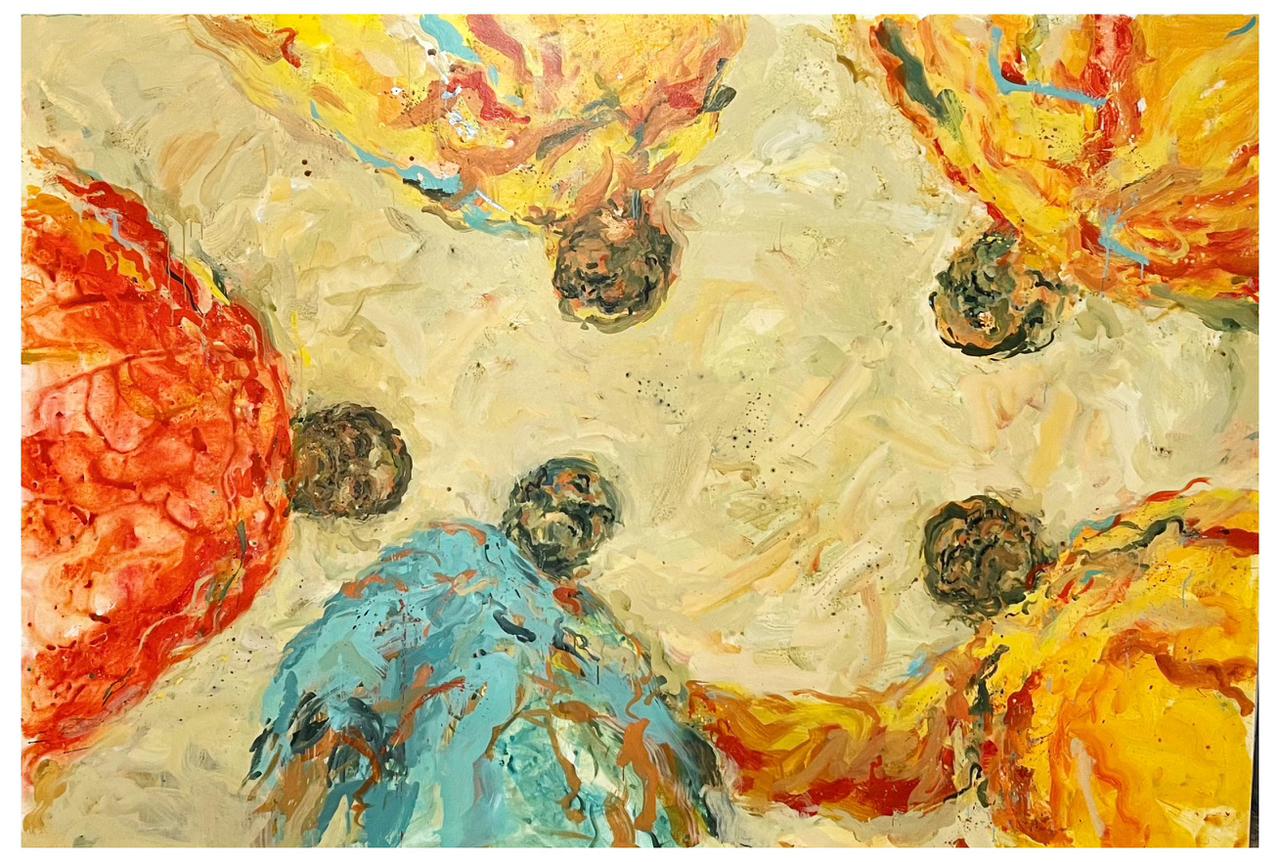
Again and again, Abd returned to the idea that every person experiences history differently. While we often speak about wars, revolutions, migrations, and catastrophes as collective experiences, he is interested in the individual life lived within them.
"When I asked whether he collects art himself, he spoke about first encountering a work by Marwan Kassab Bachi as a student. He loved it immediately, but could not afford it. Years later, he came across the same work again and purchased it. What stayed with him was not the acquisition itself, but the realization that the work still carried the same force it had years earlier.
"Every person is an event unto themselves," he says.
It is a deceptively simple statement, but one that unlocks much of his work. The question is not only what happened, but what that event becomes once it enters a person's life.
This way of thinking can be traced throughout his practice. His graduation project centered on puppets, figures stripped of their spontaneity and placed into roles they did not choose. Later came Noah's Ark, not as a story about catastrophe, but as a question. Was the Ark the beginning of a new world or the end of an old one? The answer, for Abd, was less important than the act of asking.
"He is not interested in work that remains trapped within the moment that produced it. He is interested in work that continues to ask something of us years later.
Animals, performers, puppets, and symbolic figures appear throughout his paintings, not as illustrations of reality but as a way of creating distance from it. Abd speaks often about symbolism as a means of approaching difficult subjects indirectly. The role of art, in his view, is not to provide a definitive reading of the world, but to create space for reflection.
That distance has also shaped the way he thinks about time. When I asked whether he collects art himself, he spoke about first encountering a work by Marwan Kassab Bachi as a student. He loved it immediately, but could not afford it. Years later, he came across the same work again and purchased it. What stayed with him was not the acquisition itself, but the realization that the work still carried the same force it had years earlier. The circumstances had changed. He had changed. Yet the work remained relevant.
It is a story that reveals something essential about how Abd approaches art. He is not interested in work that remains trapped within the moment that produced it. He is interested in work that continues to ask something of us years later.
Perhaps this is why he speaks so thoughtfully about galleries, collectors, and audiences. He believes artists and galleries should grow together. He believes people should encounter art in person rather than solely through a screen. He believes cultural institutions carry a responsibility toward the artists they represent. Underneath all of these ideas is a shared concern with attention, care, and longevity.
What stayed with me most, however, was the sense that Abd is less interested in answers than in perspective. Time changes perspective. Distance changes perspective. Experience changes perspective. The event itself may remain the same, but our relationship to it never does.
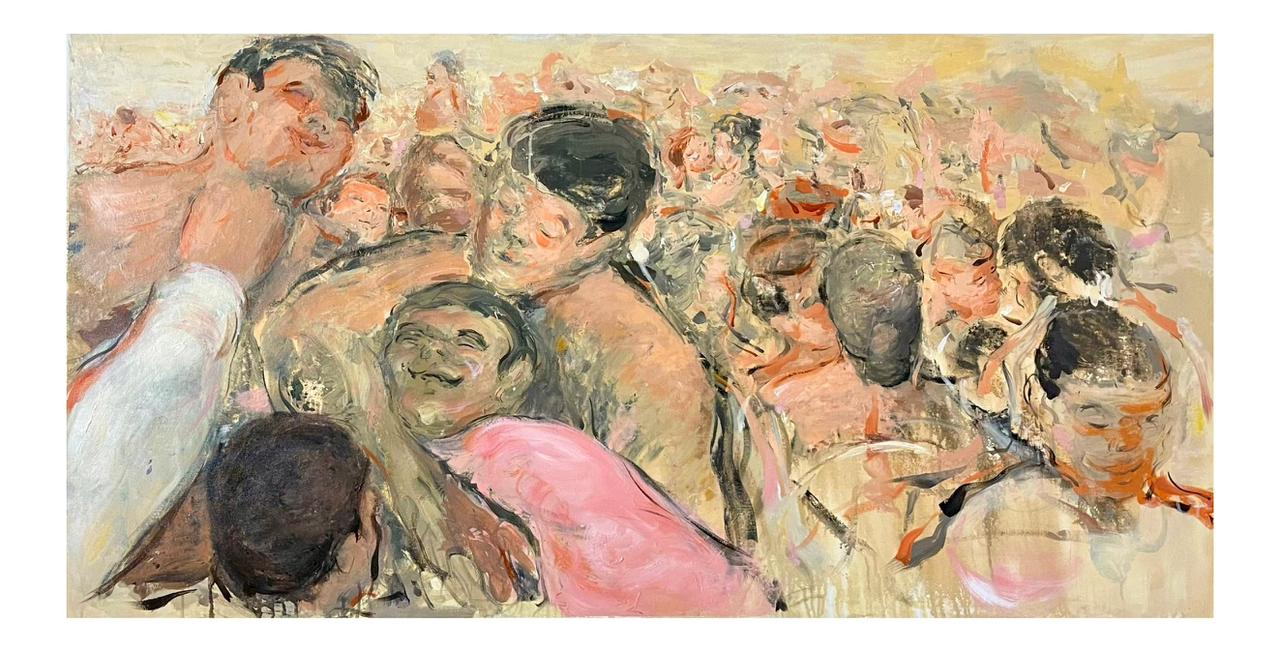
His work asks us to sit within that uncertainty.
Not because uncertainty is the goal, but because it is often where the most human questions begin.
This is what makes Abd Kasha's work so compelling to live with. It refuses to remain fixed. Like the questions it poses, it continues to shift as time, experience, and perspective reshape the person standing before it.